

 Back
BackFetrastobart vedotin (Fetra-V) | PF-08046054
Fetrastobart vedotin (Fetra-V) | PF-08046054 is an investigational compound. Its safety and efficacy have not been established

Overview + Rationale
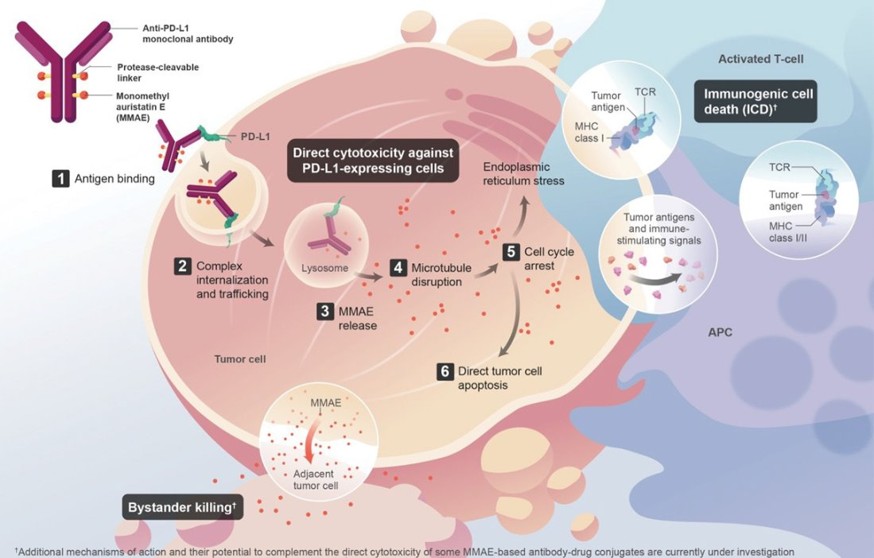
- Fetrastobart vedotin (Fetra V) is a PD-L1-directed antibody-drug conjugate (ADC) that consists of a microtubule-disrupting agent (monomethyl auristatin E [MMAE]) connected to an anti-PD-L1 antibody by a protease-cleavable mc-vc linker.1
- PD-L1 expression on cancer cells facilitates tumor growth and immune evasion by suppressing T cells in the tumor microenvironment.1
- PD-L1 expression is elevated in multiple solid tumors, including head and neck squamous cell carcinoma, non-small-cell lung cancer, melanoma, triple-negative breast cancer, urothelial cancer, cervical cancer, gastric cancer, ovarian cancer, and esophageal cancer.2-17
- The elevated expression of PD-L1 in solid tumors relative to normal tissue makes it an ideal target for ADCs.2
- The primary MOA of Fetra V is induction of tumor cell death through direct cytotoxicity via MMAE delivery to PD-L1 expressing cancer cells, bystander effect, and immunogenic cell death (ICD).1
- The Fetra V antibody has been designed to enable targeting of PD-L1 through engineering for potential of increased internalization and payload delivery.2
- While Fetra V binds PD-L1, pharmacokinetic data suggests traditional checkpoint inhibition through blockade of PD-(L)1 interactions is unlikely.2
Mechanism of Action
Stage of Development

Advanced Solid Tumors
Phase 1 Monotherapy and Combination
Thoracic Cancer & Squamous Cell Carcinoma of the Head and Neck (SCCHN)
Phase 1 Monotherapy and Combination
Phase 3 Monotherapy
Phase 3 Monotherapy